My Sister-In-Law Cleaned Hotel Rooms For 22 Years. She Never Once Scrubbed A Toilet.
Housekeepers get about four minutes per bathroom — and their toilets still pass a white-glove inspection. Here’s the 60-second trick they use instead of a brush.
I need to tell you about the most embarrassing Thanksgiving of my life, because it’s the reason I will never buy a toilet brush again.
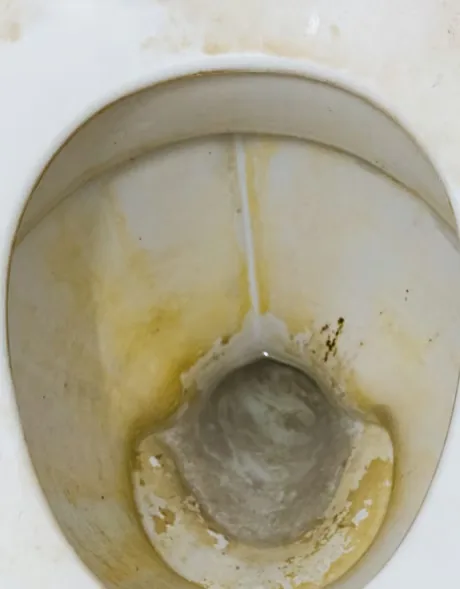
We have hard well water. If you do too, you already know what that means: the ring. That stubborn brown-orange ring at the waterline that comes back no matter what you do.
Two days before we hosted eighteen people for Thanksgiving, I deep-cleaned the guest bathroom. On my knees. Gloves, gel, brush, the whole routine. My back ached for the rest of the evening.
Thanksgiving afternoon, my niece comes out of that bathroom and whispers to her mom — loud enough for me to hear — “Aunt Susan’s toilet is kind of gross.”
The ring was already back. Two days. That’s all it took.
The Part Nobody Ever Told Me
Here’s what I learned later, and it explains years of wasted scrubbing.
Those stains aren’t “dirt sitting on the surface.” They’re mineral deposits — limescale, calcium, rust from hard water — that chemically bond to the porcelain. And the worst buildup happens at and below the waterline, plus up under the rim where you can’t see or reach.
Now think about how a squeeze-bottle gel works. You squirt it under the rim, it slides down the bowl in about four seconds, and it’s gone — diluted into the water before it ever had a chance to work on the stain. You’re basically paying for thickened bleach-water that touches the stain for a few seconds on its way down.
So the brush has to do all the real work. Which means you do all the real work — on your knees, face inches from the bowl, splashing toilet water around while the bleach fumes hit your nose.
And that brush? It goes back in its little holder, wet, and sits there. I’d rather not repeat what I read about what grows on it.
I’d accepted all of this as just… life. Until my sister-in-law Rhonda saw me scrubbing at Christmas and laughed at me.
“We Had Four Minutes Per Bathroom. You Think We Scrubbed?”
Rhonda cleaned rooms for hotels for 22 years, most of it as a head housekeeper training new staff.
I honestly thought she was pulling my leg. A toilet that cleans itself while you do something else?
A week later a little bag showed up in my mailbox with a sticky note: “Stop scrubbing. Love, R.”
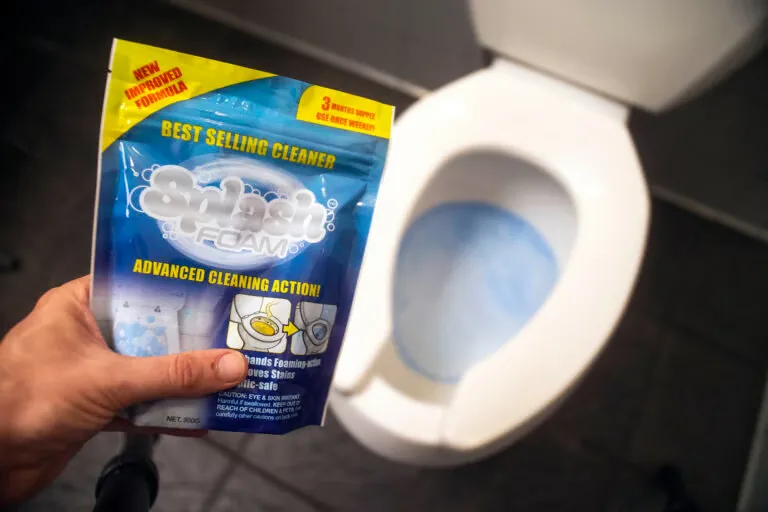
Inside was something called Splash Foam Toilet Cleaner.
What Actually Happens When It Hits The Water
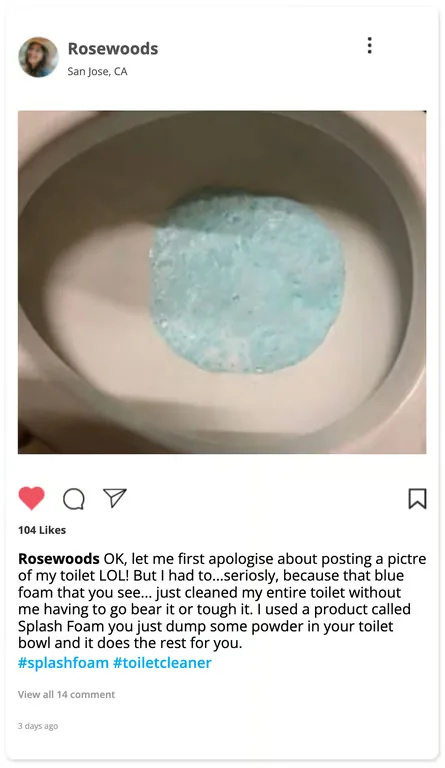
It’s a powder. The moment it touches water, it reacts and erupts into a thick foam that expands to fill the bowl — up under the rim, across the waterline, and down into the drain. All the places a gel slides right past.

That contact time is the whole secret. Instead of touching the stain for four seconds, the foam sits directly on it for 30 minutes. Its formula bonds with the mineral deposits and breaks their grip on the porcelain, so when you flush, the buildup rinses away with the foam:
- Limescale deposits — the crusty white-grey buildup
- Calcium rings — the hard waterline ring that laughs at bleach
- Rust stains — the orange streaks from iron-heavy water
- Hard water scaling — including under the rim and down the drain
The routine takes less than a minute of actual effort:
- Pour in a teaspoon of the powder
- Watch the foam expand and cover the bowl
- Walk away for 30 minutes
- Flush. That’s it — no brush, no gloves, no kneeling
It’s safe to touch and doesn’t irritate skin, there’s no chlorine cloud stinging your eyes, and because it works in any standing water, people use it on sinks, tile, and even washing machines. But the toilet is where it feels like magic.
My Own (Slightly Disgusting) Test
I wanted a fair test, so I did something I’m not proud of: I let the guest toilet go for three weeks. Hard well water plus zero cleaning — by the end it looked bad enough that I kept the lid down when anyone came over.
One teaspoon. The foam came up fast — my first thought was that it looked like a science-fair volcano. I closed the lid, set a timer, and folded laundry.
Thirty minutes later I flushed and just stood there watching weeks of brown mineral gunk swirl down the drain. The waterline ring — the one I used to attack with a pumice stone — was simply gone.
I never touched a brush. My brush is in the garage now, with the paint supplies, where it belongs.
I’m Clearly Not The Only One
Splash Foam has sold over 10 million units, mostly through word of mouth — it keeps selling out each time new stock arrives. More than 14,000 verified customers have left 5-star reviews, and they all sound like some version of Rhonda:
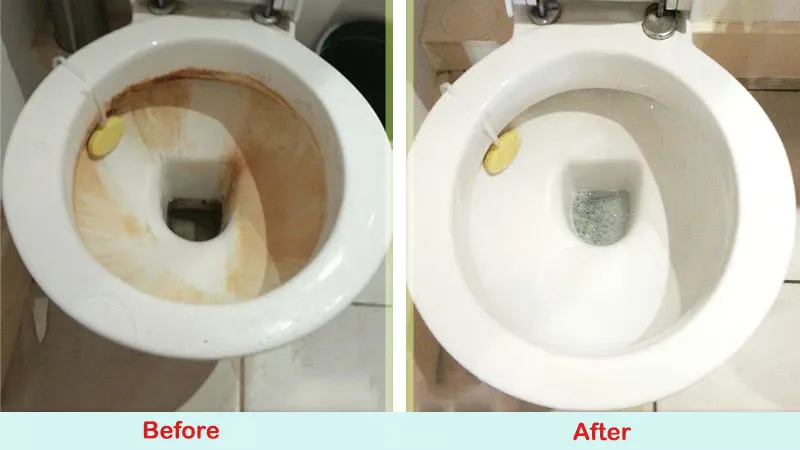
“Our well water left dark brown stains I had to fight every few days. I tried this as a last resort expecting nothing — the stains were gone after the very first use. Nobody scrubbed anything.”
“I’ve always used the runny liquid cleaners. This foamed up and left the bowl clean as a whistle. I got distracted once and left it overnight — came back to a sparkling toilet.”
“Three kids, one bathroom. I used to spend half my Saturday cleaning. Splash Foam does the work for me now — drop it in, come back, flush.”
What It Costs (And The Math That Sold Me)
A box is $19.95. One teaspoon every two weeks keeps the bowl spotless, so a single box lasts about a year.
Compare that to my old routine: a $6 gel bottle every month, a new brush every few months, plus the pumice stones for the ring. I was spending more than double — to do it the miserable way, on my knees.
Splash Foam is currently offering readers a 50% discount for new customers. Because it has a habit of selling out when new stock lands, it’s worth checking availability now rather than bookmarking this page for later. (Rhonda’s tip: grab a second box — it’s become her standard housewarming gift.)
It’s been eight months since that Thanksgiving. The guest bathroom passes the niece test every single week, and the total effort involved is pouring a spoonful of powder and walking away.
Some habits deserve to die. Scrubbing a toilet on your hands and knees is one of them — the hotels figured that out decades ago. It just took Rhonda laughing at me for me to catch up.
Reader Comments (37)